Sports in Kota
Hockey in Kota: where to play and how to get started
Written by Kota Sports Editorial Team · Updated
Hockey in Kota is kept alive by schools, colleges, coaches and institutional teams who want to pass on a sport with a proud history in India. Field hockey needs a big flat ground and a little more kit than many sports, so it is less visible than cricket or badminton. But for young players it offers a clear path into competitive team sport. This guide explains where hockey is played in Kota, how to get coaching and how the competition path works.
Where hockey is played
Schools. School teams are the main entry point. Many schools with large grounds include hockey in their sports programme, especially for inter-school competitions.
Colleges and universities. College sports departments field hockey teams for inter-college and inter-university events.
Sports complexes. Government sports complexes host district events and, where available, coaching programmes. See our guide to stadiums and sports complexes in Kota.
Institutional teams. Across India, police, railway and other institutional teams have long supported hockey. If you are an adult player, ask local players which teams are active.
Grass, earth and turf
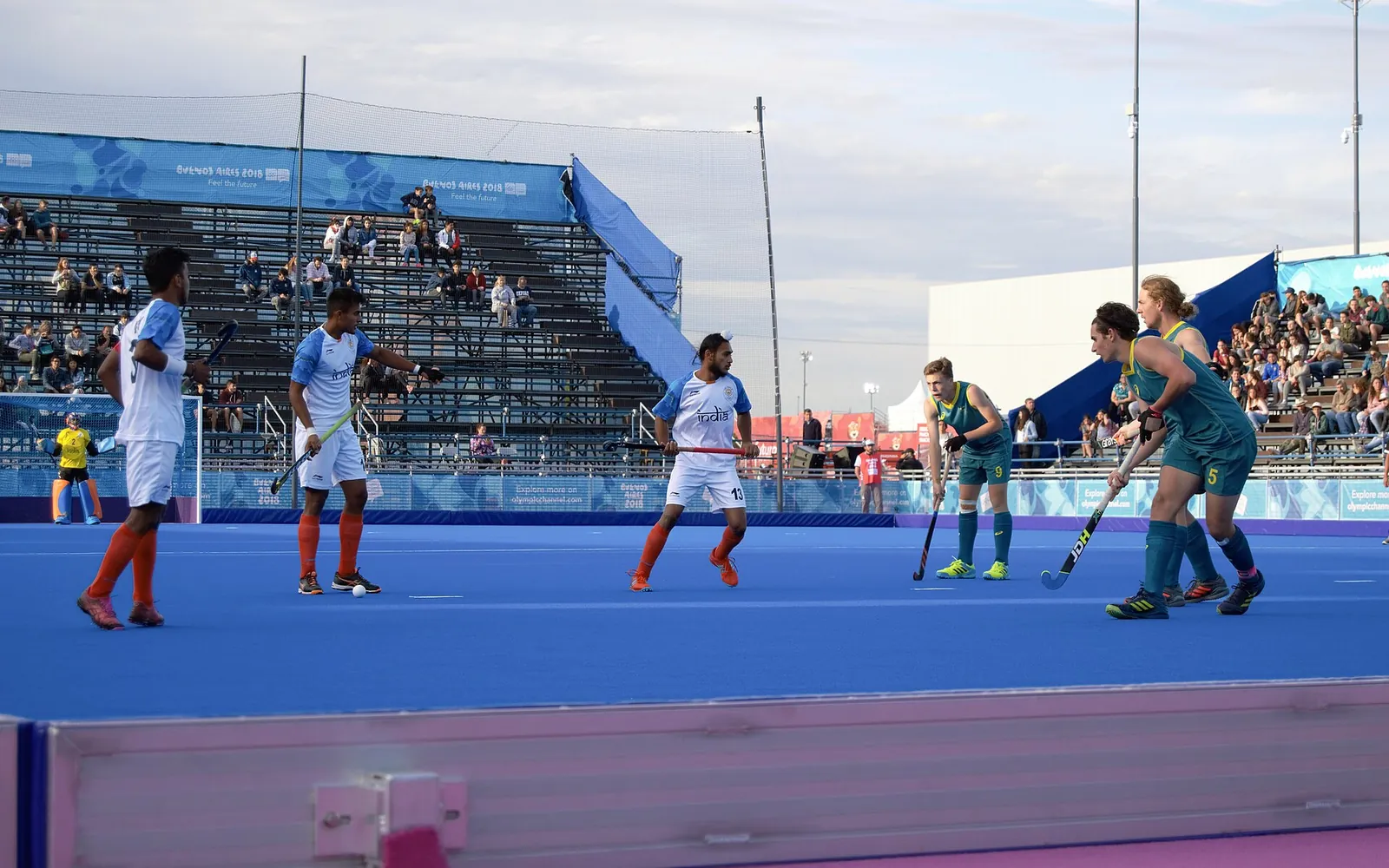
International hockey is played on artificial turf, which is fast and true. In many Indian cities outside the big hockey centres, players train mostly on grass or earth. The game is slower and the ball bounces more on these surfaces. Players who move up to state-level camps usually need time to adjust to turf, so any chance to train on turf is valuable.
Coaching
A good hockey coach for beginners focuses on:
- holding the stick correctly and controlling the ball on the move,
- pushing and passing accurately,
- basic tackling without dangerous stick play,
- positions and simple team shape,
- small-sided games to build decision-making.
Ask about the coach’s background, how many players attend, and whether protective kit is mandatory in training. Our beginner’s guide to joining a sports academy in Kota has a full checklist.
Government coaching programmes run through the Rajasthan State Sports Council and the district sports office. What is offered changes over time, so ask the office directly.
Competitions
Organised hockey in India runs under Hockey India and its state member units, with junior and senior championships. School hockey runs through school sports bodies and the School Games Federation of India. Colleges compete in inter-university events.
Trials for district and state teams are announced by the relevant bodies, often at short notice. Our guide to sports tournaments in Kota explains how to follow and check announcements.
Kit and safety
- Stick. Length should suit your height; when the stick stands upright, the top usually reaches around your hip bone. A coach can help you choose.
- Shin guards and a mouth guard. Essential, even in practice.
- Shoes. Studs or turf shoes depending on the surface.
- Goalkeeper kit. Helmet, pads, kickers and body protection, usually provided by the team.
Never raise the stick dangerously near other players, and warm up properly before sprint work. In Kota’s summer heat, train early or late and drink plenty of water. See our Kota sports gear guide for buying tips.
Fitness for hockey
Hockey combines repeated sprints with long periods of running and a low, bent posture. Leg strength, back strength and endurance all matter. Many players add running sessions; our guide to athletics in Kota covers places to train.
Related sports
If you enjoy hockey, you may also like football in Kota, which uses similar team shape and running patterns.
For parents
Hockey is a good team sport for children who enjoy running and working with others. Ask the coach whether protective kit is required and supplied for beginners, how sessions are supervised, and how the coach handles the higher risk of knocks from sticks and balls. Children usually start with small-sided games and softer balls before full matches. If your child enjoys it, the school team and district competitions offer a clear path forward.
Common hockey injuries and what to do
Hockey injuries usually come from the stick, the ball or a fall. The most common are bruises and cuts to the shins and hands, ankle sprains, hamstring strains and, less often, injuries to the face or head from a raised ball or stick. Shin guards and a mouth guard reduce the risk, and goalkeepers need full protective kit at all times.
If a player is hit on the head or face, or cannot put weight on a leg, stop play. For minor sprains and strains, rest, ice, gentle compression and elevation for the first couple of days usually help, followed by a gradual return. Our guide to sports injury treatment in Kota explains first steps, when to go to hospital and how to find a qualified physiotherapist.
Training in the heat
Hockey’s constant running makes heat a real risk in Kota’s summer. Train early in the morning or after sunset, use rolling substitutions in practice games, and take water breaks in shade. Goalkeepers in full kit should remove helmets and pads at breaks. See playing sports in Kota’s heat.
Girls’ hockey
India’s women’s hockey team has inspired many girls to take up the sport. Ask schools and coaches about girls’ teams and supervision; see sports for girls in Kota.
A weekly practice plan for beginners
Beginners who only play matches tend to improve slowly. A simple weekly plan, agreed with your coach, builds skills and fitness without overloading young players:
- Skills (two sessions): dribbling with the ball close to the stick, push and slap passes to a partner, and receiving on both sides. Ten minutes of each, on the surface you will play on.
- Small-sided games (one or two sessions): three or four a side in a small area, which gives every player many more touches than a full match.
- Fitness (one short session): repeated short sprints with rest, plus some skipping; see how to improve stamina for sports and skipping rope workout for beginners.
- Rest: at least one full rest day; sleep and recovery for young athletes explains why.
Start every session with the warm-up exercises before sports routine. Hockey’s bent-over running position loads the lower back and hamstrings, so the warm-up matters. In the monsoon, check the ground before training; slippery grass and puddles change how the ball runs and raise the risk of falls, as our guide to sports in the monsoon in Kota explains.
New players should also learn the circle rule, stick rules, penalty corners and cards early; our hockey rules for beginners explains them in plain language.
How to check current information
- Coaching programmes and trials: the district sports office and your school or college sports department.
- Competitions: Hockey India’s state member unit and your coach.
- Ground access: ask the school, college or sports complex directly.
Frequently asked questions
Where can I learn hockey in Kota?
Through school teams, college sports departments and coaching programmes at sports complexes. The district sports office can tell you if a government hockey coaching scheme is running.
What equipment do I need for hockey?
A stick of the right length, shin guards, a mouth guard and shoes suited to the surface. Goalkeepers need full protective kit, which teams usually provide.
How do I get selected for district hockey?
Through trials and performance in competitions organised by the state hockey body and sports department. Your coach is the best source for trial notices.
What protective kit do hockey players need?
Shin guards and a mouth guard for every player, even in practice, plus shoes suited to the surface. Goalkeepers need a helmet, pads, kickers and body protection, usually provided by the team.
How often should a beginner practise hockey?
Two or three sessions a week, mixing skills, small-sided games and some fitness work, with at least one full rest day, is a sensible start for most beginners. Follow your coach's plan and build up gradually.
Sources
Editorial team
The Kota Sports team writes and updates these guides to sport in Kota, Rajasthan, checking facts against official sources and saying clearly where readers need to confirm details with a venue or organiser.