Sports in Kota
Basketball rules for beginners: scoring, violations and fouls
Written by Kota Sports Editorial Team · Updated
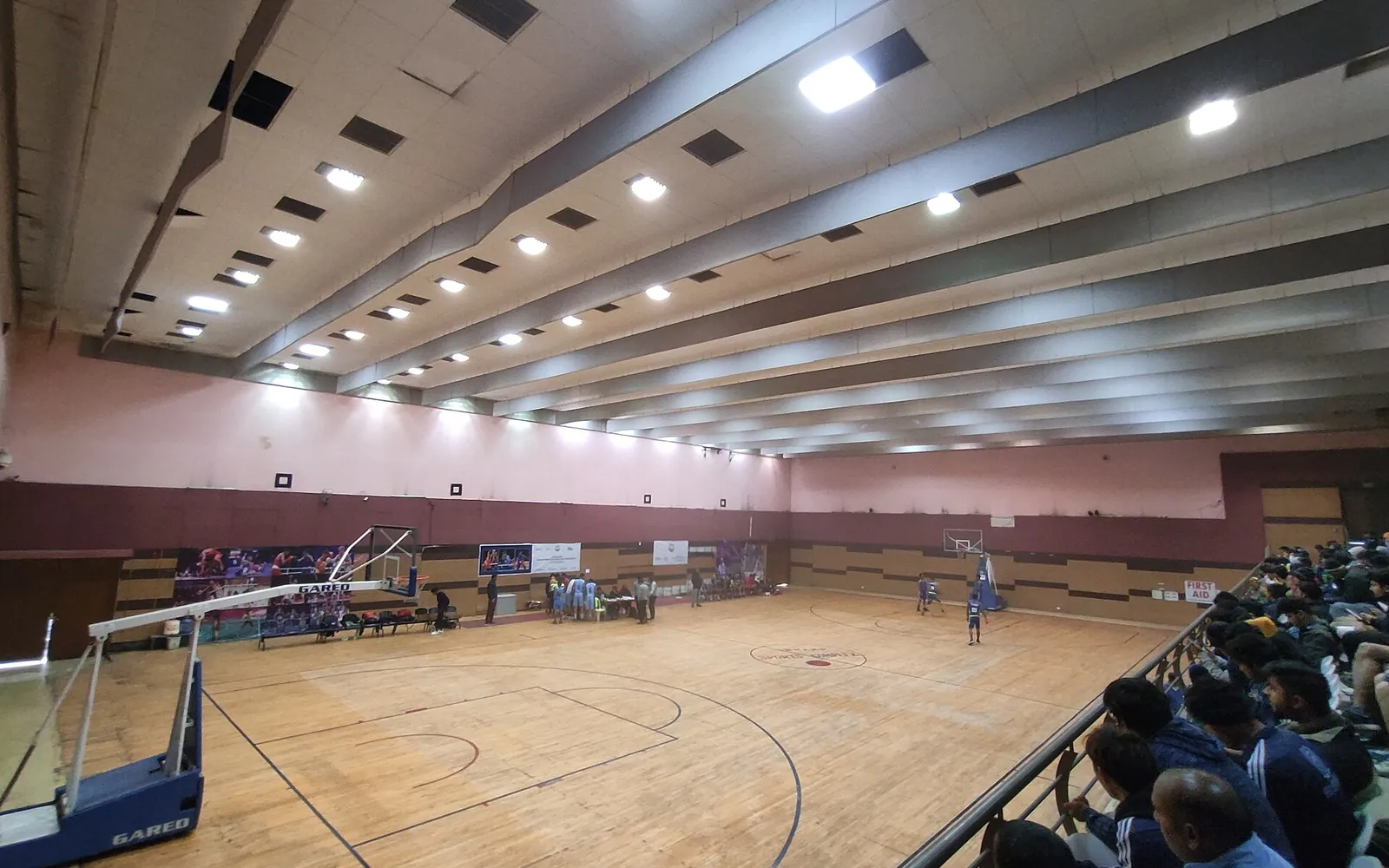
Basketball is fast to pick up on a school or college court, but the whistle goes often for new players, usually for travelling, double dribbling or fouls they did not know they were committing. This guide explains the basketball rules for beginners under FIBA, the international federation whose rules the Basketball Federation of India and most Indian school and state events use. You will learn how scoring works, the main violations, the time rules, and how personal and team fouls add up. NBA rules differ in a few places, which we point out where it matters. Local events may shorten games or adapt rules for younger players, so check the event format.
For courts and coaching in the city, see our guide to basketball in Kota. To pick the right ball, read basketball size by age.
The basics
- Players: five per team on court. Substitutions are made when the ball is dead and the clock is stopped.
- Duration: four quarters of 10 minutes under FIBA rules, with a longer break at half-time. If the score is tied, five-minute overtime periods are played until there is a winner. The NBA uses 12-minute quarters.
- Start: a jump ball in the centre circle. After that, held balls and similar situations are settled by the alternating possession arrow.
- Court: the full FIBA court is 28 metres long and 15 metres wide. The basket is 3.05 metres (10 feet) high.
How scoring works
| Shot | Points |
|---|---|
| Field goal from inside the three-point line | 2 |
| Field goal from behind the three-point line | 3 |
| Free throw | 1 |
The three-point line is 6.75 metres from the basket in FIBA play. A shooter’s feet must be behind the line, not on it, for a three. After a successful basket, the other team restarts from behind its own end line.
Violations
A violation is a rule break without illegal contact. The penalty is simple: the other team gets the ball.
- Travelling: moving your feet illegally while holding the ball, such as taking extra steps, dragging or lifting your pivot foot before you release the ball to dribble, or shuffling your feet after you stop.
- Double dribble: dribbling with both hands at once, or stopping your dribble and starting again.
- Carrying: letting the ball rest in your hand, turning it over as you dribble.
- Out of bounds: the ball, or a player touching it, touches the line or the floor outside. The lines are out.
- Backcourt: once your team has moved the ball into its front court, you cannot take it back over the halfway line yourselves.
- Kicking the ball deliberately or punching it with a fist.
- Goaltending: touching a shot on its way down towards the basket, or touching the ball while it is on the rim, depending on the situation.
The time rules
- 24 seconds: a team must attempt a shot that touches the rim within 24 seconds of gaining control. In FIBA games, the shot clock is reset to 14 seconds in some situations, such as when the attacking team gets an offensive rebound.
- 8 seconds: the team must move the ball from its backcourt into its front court within 8 seconds.
- 3 seconds: an attacking player may not stay in the opponents’ restricted area (the painted key) for more than 3 seconds while their team has the ball.
- 5 seconds: a closely guarded player holding the ball must pass, shoot or dribble within 5 seconds, and a throw-in must be released within 5 seconds.
Fouls
A foul involves illegal contact or unsporting behaviour.
- Personal fouls include pushing, holding, blocking an opponent’s path, charging into a defender who has established a legal position, and illegal use of hands, such as hitting the shooter’s arm.
- Shooting fouls: if a shooter is fouled and misses, they take two free throws (three if it was a three-point attempt). If the shot goes in, the basket counts and they take one extra free throw.
- Fouling out: under FIBA rules a player who commits five fouls must leave the game. The NBA limit is six.
- Team fouls: each team’s fouls are counted per quarter. In FIBA play, once a team has committed four team fouls in a quarter, every further defensive foul gives the opponent two free throws, even when the player was not shooting.
- Technical fouls punish behaviour such as arguing with officials or delaying the game. Unsportsmanlike and disqualifying fouls cover dangerous or excessive contact.
Defending legally
Beginners give away many fouls by reaching in. To defend well:
- Stay between your opponent and the basket, with your feet doing the work.
- Keep your hands up and vertical; you are entitled to the space directly above you.
- Do not slide underneath a player who is already in the air.
- Establish your position before the attacker arrives if you want to draw a charge.
Safety and fitness
Basketball is full of jumping, cutting and landing. Warm up properly with our warm-up exercises before sports, wear proper court shoes (see how to choose sports shoes), and build leg strength and stamina gradually. A skipping rope workout is a good way to train footwork and ankle control. On outdoor courts in summer, play early or late and follow our advice on playing sports in Kota heat. If you twist an ankle, see sports injury treatment in Kota for first steps.
3x3 basketball in brief
3x3 is the half-court Olympic format. It uses one basket, a single 10-minute period or first to 21 points, baskets worth 1 point (2 from beyond the arc), and a 12-second shot clock. It is quick to organise on a single outdoor hoop, which makes it popular in schools and colleges.
Rules beginners often get wrong
- “The line is in.” In basketball the boundary lines are out.
- “You can stop and start dribbling again.” Once you stop, you must pass or shoot.
- “Any contact is a foul.” Incidental contact that gives no advantage is often allowed.
- “Three steps are allowed on a layup.” The gather step and two steps are allowed; more is travelling.
Learning the rules in practice
The quickest way to learn is to play small-sided games with a coach who explains each whistle, and to referee a few practice games yourself. When you are ready for competition, our guide to sports tournaments in Kota explains how to find school, district and open events.
For other sports in the city, browse all our Kota sports guides.
Frequently asked questions
How many players are on a basketball team?
Five players from each team are on the court at once. FIBA competitions allow up to 12 players on a team list, with unlimited substitutions when play is stopped. Local events may allow fewer substitutes.
What is travelling in basketball?
Travelling is moving your feet illegally while holding the ball, for example taking too many steps without dribbling or moving your pivot foot. The ball goes to the other team.
What is a double dribble?
Dribbling with two hands at the same time, or stopping your dribble and then starting to dribble again. It is a violation and the other team gets the ball.
How many fouls before you foul out in basketball?
In FIBA basketball a player is disqualified after five fouls. The NBA uses six because its games are longer. Local events usually follow FIBA.
What is the 24-second rule?
A team must attempt a shot that touches the rim within 24 seconds of gaining control of the ball. In FIBA games the clock is reset to 14 seconds in some situations, such as an offensive rebound.
Sources
Editorial team
The Kota Sports team writes and updates these guides to sport in Kota, Rajasthan, checking facts against official sources and saying clearly where readers need to confirm details with a venue or organiser.