Sports in Kota
Table tennis rules for beginners: scoring, the legal serve and doubles
Written by Kota Sports Editorial Team · Updated
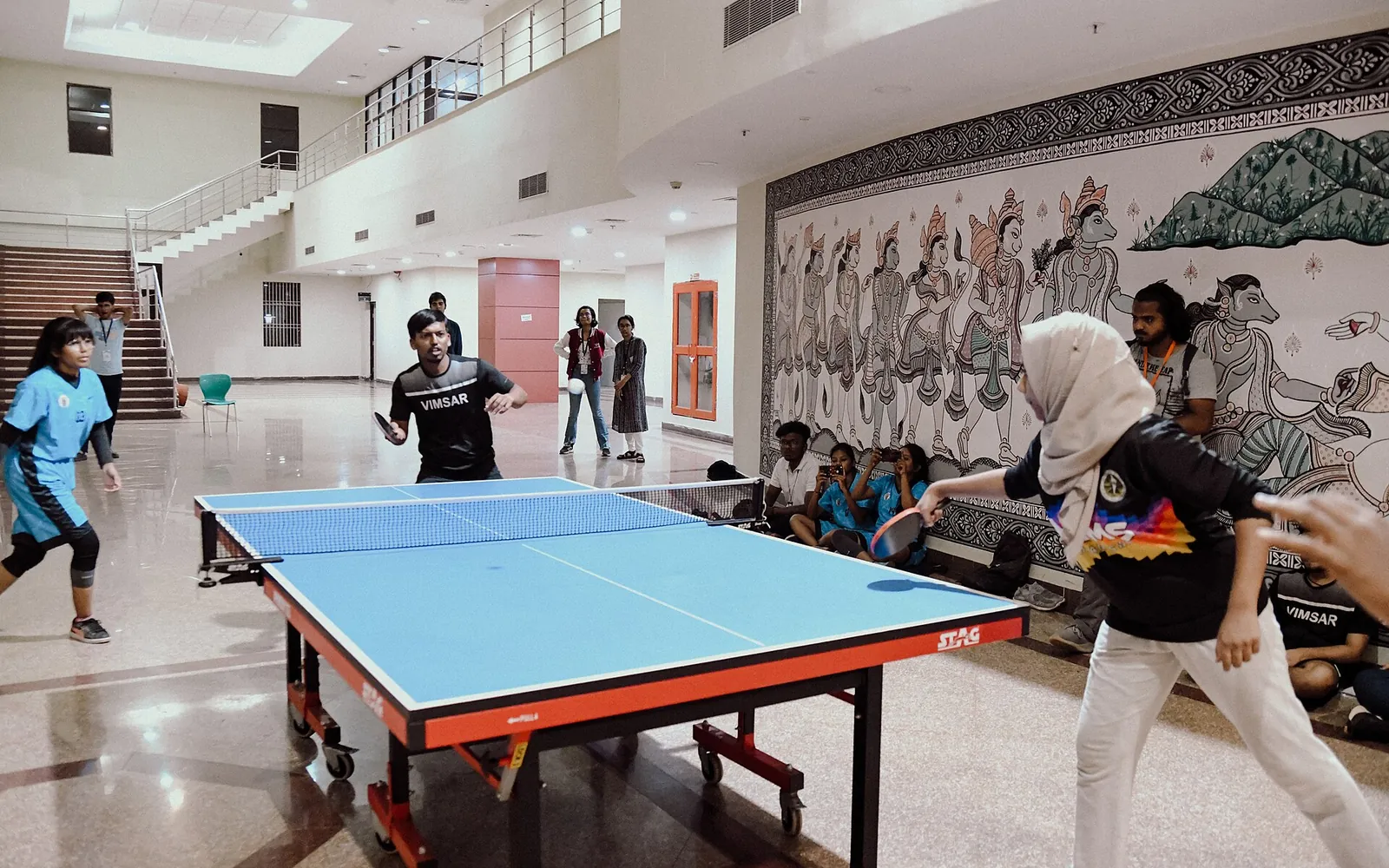
Table tennis is the classic hostel and society-hall sport in Kota: a table in a common room, two bats and a handful of balls are enough. Because most people learn it informally, many players reach a club, a school event or a district tournament without knowing the actual rules, especially the serve. This guide covers the table tennis rules for beginners: how scoring works, the legal serve, lets, the doubles order and the faults that cost points. It is based on the Laws of Table Tennis published by the ITTF; in any competition, the current laws and the umpire’s decisions apply.
The table, net and ball
- The table is 2.74 metres long, 1.525 metres wide and 76 cm high, with a net 15.25 cm high across the middle.
- A white centre line divides each half for doubles serving. In singles it has no effect.
- Competitions use a 40 mm plastic ball. Older celluloid balls and cheap practice balls bounce differently, so practise with the type of ball your event uses.
- The edges of the table are part of the playing surface; the sides below the edge are not.
Scoring: 11 points, 2 clear
- A game is won at 11 points.
- At 10-all, play continues until one player leads by 2 points (12-10, 13-11 and so on).
- A match is the best of an odd number of games: three in casual play, usually five or seven in competitions.
- A point is scored on every rally, whoever served.
If you learnt the game playing to 21 with five serves each, that format was replaced internationally in 2001. Local hostel games still use it sometimes; agree the format before you start.
Who serves and when
- The first server is decided by lot, usually a coin toss or by guessing which hand hides the ball. The winner chooses to serve, to receive or which end to play from.
- Service passes to the other player every two points.
- From 10-all, each player serves one point in turn.
- The player who served first in a game receives first in the next.
The legal serve
The serve is where most casual players break the rules without knowing it. A legal serve:
- Starts with the ball resting on the open, flat palm of the free hand, held still.
- The ball is behind the end line and above the level of the playing surface.
- The server tosses it almost vertically upward, without spin, at least 16 cm.
- The ball is struck as it falls, not on the way up.
- It must bounce once on the server’s side, pass over or around the net, and then bounce on the receiver’s side.
- From the start of the serve until it is struck, the ball must be visible to the receiver. You may not hide it with your body, arm or clothing.
Serving straight out of the fingers, tossing it a few centimetres, or hiding the contact behind your shoulder are all faults in competition. Practise a clean, high toss early; it is much harder to fix later.
Lets
A let is a rally that is replayed with no point scored. The most common let is a serve that touches the net and then lands correctly on the receiver’s side. Other lets include serving before the receiver is ready (if they do not try to return it) or play being disturbed by something outside the players’ control, such as a ball rolling in from the next table. In shared halls, agree how you will handle stray balls before you start.
How you lose a point
- Failing to make a legal serve or a good return.
- The ball bounces twice on your side.
- Volleying: hitting the ball before it has bounced on your side, even if it would have gone long.
- Hitting the ball twice in succession.
- Touching the playing surface with your free hand while the ball is in play.
- Moving the table, or touching the net assembly, while the ball is in play.
- In doubles, hitting the ball out of turn.
Edge balls that touch the top edge of the table count as good. Balls that hit the side of the table below the edge do not.
Doubles rules
Doubles adds two rules:
- Diagonal serve: the serve must go from the server’s right half to the receiver’s right half, using the centre line. In doubles a serve landing on the wrong half is a fault.
- Alternate hits: partners must hit the ball in turn. If the same player hits twice in a row, the pair loses the point.
The order of service rotates through all four players. At each change of service, the previous receiver becomes the server and the partner of the previous server becomes the receiver. This sounds complicated; the easiest way to learn it is to walk through it slowly with a coach or an experienced player.
Changing ends and rest
Players change ends after each game. In the deciding game of a match, they also change ends when the first player reaches 5 points. In competitions there are short intervals between games, and each player may usually call a short time-out once per match. Local events vary, so listen to the umpire.
Casual rules versus competition rules
In hostels and society halls in Kota, games often use house rules: 21-point games, low tosses, serves that bounce anywhere. That is fine for fun, but if you plan to join coaching or enter an event, start playing the real rules early. Our guide to table tennis in Kota explains where to find clubs and tournaments, and how to choose a table tennis bat covers the equipment rules, including why competition bats need one black side and one bright coloured side.
A practice plan for learning the rules
- Week 1: play games to 11 only, with service changing every two points. Keep score aloud.
- Week 2: add the legal serve. Practise 50 serves each session with a proper 16 cm toss.
- Week 3: play doubles with friends and practise the diagonal serve and alternate hitting.
- Week 4: play a best-of-five match with a friend as umpire calling lets and faults.
Warm up before every session with the routine in warm-up exercises before sports; quick lateral movements on cold legs are a common cause of strains. If you also play badminton, compare the rules in our badminton rules for beginners guide, because the scoring and serving rules are different and easy to mix up.
Etiquette at the table
- Wait for a rally on the next table to end before collecting your ball.
- Call let balls and edge balls honestly in casual games.
- Shake hands or acknowledge your opponent at the end of a match.
- Respect booked times so the next pair can start on time.
For all our sport-by-sport guides, see the Kota sports guides hub.
Frequently asked questions
How many points is a game of table tennis?
A game is won by the first player to reach 11 points, unless the score reaches 10-all. Then the game continues until one player leads by 2 points. The old 21-point game was replaced in 2001.
How often do you change serve in table tennis?
Service passes to the other player every two points. When the score reaches 10-all, players serve one point each in turn until the game ends. The player who served first in one game receives first in the next.
What is a legal serve in table tennis?
The ball rests on your open, flat palm behind the end line and above the table, is tossed almost vertically at least 16 cm without spin, and is struck as it falls so it bounces once on your side and then on the opponent's side. It must stay visible to the receiver throughout.
What happens if the serve touches the net?
If an otherwise good serve touches the net and then lands on the receiver's side, it is a let and is served again with no point scored. If it touches the net and does not land on the other side, the server loses the point.
Can you hit the ball before it bounces in table tennis?
No. Hitting the ball before it bounces on your side of the table, called a volley, loses the point, even if you are standing behind the table.
Sources
Editorial team
The Kota Sports team writes and updates these guides to sport in Kota, Rajasthan, checking facts against official sources and saying clearly where readers need to confirm details with a venue or organiser.