Sports in Kota
Volleyball rules for beginners: scoring, rotation, touches and faults
Written by Kota Sports Editorial Team · Updated
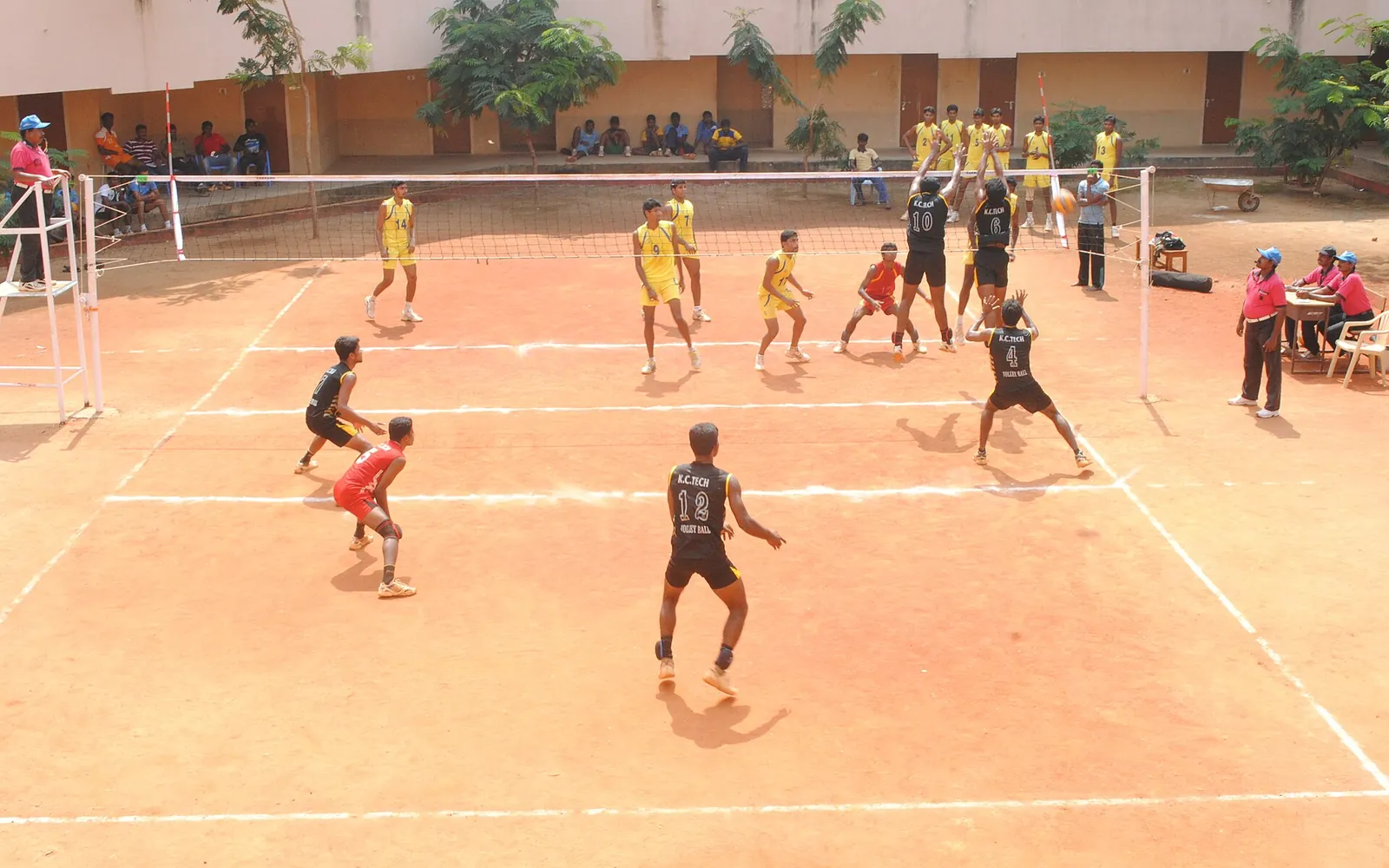
Volleyball is played across Kota on school grounds, college courts, open plots and in hostel campuses, often with whatever rules the group agrees on that day. That works for a casual evening game, but as soon as a player joins a school team, a college side or a district event, arguments start over scoring, rotation and “who touched it last”. This guide explains the volleyball rules for beginners in plain English: how scoring works, the three-touch rule, rotation and serving, net heights, the most common faults and what the libero does. It follows the international indoor rules used by most federations; local events may change some details, so always check the playing conditions.
The basics: teams, court and ball
- Players: six per side on court. Teams usually have substitutes, and the number of substitutions per set is limited.
- Court: 18 metres long and 9 metres wide, split in two by the net. Each half has an attack line 3 metres from the net, which separates the front zone from the back zone.
- Ball: a light, round ball, smaller and lighter than a football. Junior players often use lighter balls.
- Lines are in. A ball that touches any part of a boundary line is in.
On the open-air courts common in Kota, line markings fade quickly. Before a match, walk the court and agree where the lines and the attack line are.
Scoring: 25-point rally scoring
Volleyball uses rally scoring: every rally ends with a point to one side, whoever served.
- A set is won at 25 points, with at least a 2-point lead. There is no cap, so close sets can run to 30 or more.
- A match is usually best of five sets. If it reaches 2-2, the fifth set is played to 15, again with a 2-point lead.
- The team that wins a rally serves the next one.
Many school, college and local tournaments in Rajasthan play best of three sets, shorter sets or a single set in early rounds to fit more matches into a day. Agree the format before you start.
The three-touch rule
Each team may touch the ball up to three times before it must cross the net. The classic pattern is:
- Pass (dig): the first touch, usually a forearm pass, controls the ball coming over.
- Set: the second touch, usually overhead with the fingers, places the ball for an attacker.
- Attack (spike): the third touch sends the ball over, ideally where the opponents are not.
Two more points about touches:
- No player may touch the ball twice in a row, except after a block.
- A block does not count as one of the three touches, so a team can block and then still use three touches.
Rotation: why players move around
Rotation is the rule beginners find hardest. Each player has a position: three at the front (left, centre, right) and three at the back.
- At the moment of the serve, players must be in their correct rotation order: each front-row player in front of the matching back-row player, and left and right in the correct order.
- When your team wins the serve back from the opponents, all six players rotate one position clockwise. The player who moves into the back-right position serves.
- If your team wins a point on its own serve, there is no rotation and the same player serves again.
After the serve is struck, players can move anywhere on their own side, which is why setters and attackers switch positions during rallies. But back-row players may not attack the ball from above net height in front of the attack line, and they may not block.
Serving rules
- The server stands behind the end line, within the width of the court.
- They must serve within 8 seconds of the referee’s whistle in official play.
- The ball is tossed or released and hit with one hand or arm.
- The server must not touch the court or the end line until after contact.
- A serve that touches the net and still goes over into the opponents’ court is in play under current international rules.
Underarm serves are legal and are the easiest way for beginners to start. Learn a consistent underarm serve before trying overarm or jump serves.
Common faults
A fault ends the rally and gives the point to the other side. The most common are:
- Four touches by one team.
- Double contact: one player touching the ball twice in a row (except after a block, or on the first touch of a hard-hit ball where contacts are part of one action).
- Catching or throwing: the ball must be hit cleanly, not held.
- Net touch: touching the net between the antennae while playing the ball.
- Centre line: crossing fully into the opponents’ court under the net in a way that interferes with them.
- Out of rotation at the moment of the serve.
- Foot fault on the serve: stepping on or over the end line before contact.
- Ball out: landing outside the lines, hitting the antenna, or passing outside the antennae.
- Back-row attack from in front of the attack line above net height.
Net heights
Under international rules the top of the net is 2.43 metres for men and 2.24 metres for women. School, junior and veterans’ events often use lower nets for younger or older players. If you are setting up a court at a school or a society ground, measure the net at the centre and at both ends; a sagging net changes the game.
The libero
Many teams use a libero, a defensive specialist in a different coloured shirt. The libero:
- can replace any back-row player when the ball is out of play, without counting as a normal substitution;
- may not block, and may not attack the ball when it is entirely above net height;
- does not serve under international rules (some school and college leagues have different rules).
Beginners’ matches in Kota often do not use a libero at all. That is fine; learn the basic six-player rotation first.
Learning the rules on court
The quickest way to learn is to play a few practice games with someone whistling and calling faults. A school PE teacher or coach can walk you through rotation slowly, one serve at a time. Read our volleyball in Kota guide for where to find courts, teams and coaching, and the warm-up exercises before sports routine, because jumping and diving on cold muscles is a common cause of strains. Volleyball also builds the stamina covered in how to improve stamina for sports, and if you play on outdoor courts in summer, read playing sports in Kota’s heat first.
Rules beginners often get wrong
- “You can’t touch the net at all.” The fault is touching the net while playing the ball; incidental contact that does not affect play may not be a fault. The referee decides.
- “Lines are out.” Lines are in.
- “The serve can’t touch the net.” Under current international rules it can, if it goes over.
- “Anyone can spike from anywhere.” Back-row players must take off from behind the attack line.
- “You must use your hands.” Any part of the body may be used, with a single clean contact.
Etiquette in local games
- Call your own net touches and double contacts honestly in casual play.
- Agree the format, net height and lines before the first serve.
- Rotate fairly so everyone gets to serve and play at the net.
- Keep the court clear of bags and bottles; they cause ankle injuries.
For the wider picture of sport in the city, see all our Kota sports guides.
Frequently asked questions
How many points is a set in volleyball?
Under the international rules a set is won by the first team to 25 points with at least a 2-point lead, so a set can go to 26-24, 27-25 and beyond. A match is the best of five sets, and the fifth set is played to 15, also with a 2-point margin. Many school and local events play best of three, so check the format first.
How many times can a team touch the ball in volleyball?
A team may touch the ball up to three times before sending it over the net. A touch by a blocker at the net does not count as one of the three. The same player cannot touch the ball twice in a row, except after a block.
What is the net height in volleyball?
For senior men the top of the net is 2.43 metres above the court, and for senior women it is 2.24 metres. Junior, school and veterans' events often use lower nets, so check the playing conditions for your age group.
Is the ball in if it lands on the line?
Yes. If any part of the ball touches a boundary line, it counts as in.
Can you kick the ball in volleyball?
Under current international rules the ball may touch any part of the body, including the foot, as long as it is a single clean contact and not caught or thrown. Some school and local events still use older rules, so ask the referee.
What does the libero do?
The libero is a defensive specialist who wears a different coloured shirt, can replace any back-row player without a normal substitution, and may not attack the ball from above net height or block. Under international rules the libero does not serve.
Sources
Editorial team
The Kota Sports team writes and updates these guides to sport in Kota, Rajasthan, checking facts against official sources and saying clearly where readers need to confirm details with a venue or organiser.