Sports in Kota
Badminton rules for beginners: scoring, serving, court and faults
Written by Kota Sports Editorial Team · Updated

Badminton is one of the most played sports in Kota, in sports complexes, society halls, school courts and open-air games on summer evenings. Many beginners pick up the game without ever learning the rules properly, which leads to arguments about scores and serves as soon as they join a coaching batch or enter a tournament. This guide explains the badminton rules for beginners in plain English: how scoring works, where to stand and how to serve, the court lines for singles and doubles, and the most common faults. It is based on the Laws of Badminton; for competitions, the current official laws and the referee’s decisions always apply.
Scoring: 21-point rally scoring
- Every rally wins a point, whoever served. This is called rally scoring.
- A game is won at 21 points.
- At 20-all, a side must lead by 2 points to win (22-20, 23-21 and so on).
- At 29-all, the next point wins, so the highest possible score is 30-29.
- A match is usually best of three games.
- The side that wins a game serves first in the next game.
- Intervals: in official play, there is a short interval when the leading side reaches 11 points, and a longer one between games. Players change ends after each game, and in the third game when the leading side reaches 11.
Casual games and some local events use shorter formats, such as one game to 21 or games to 15. Agree the format before you start.
The court and its lines
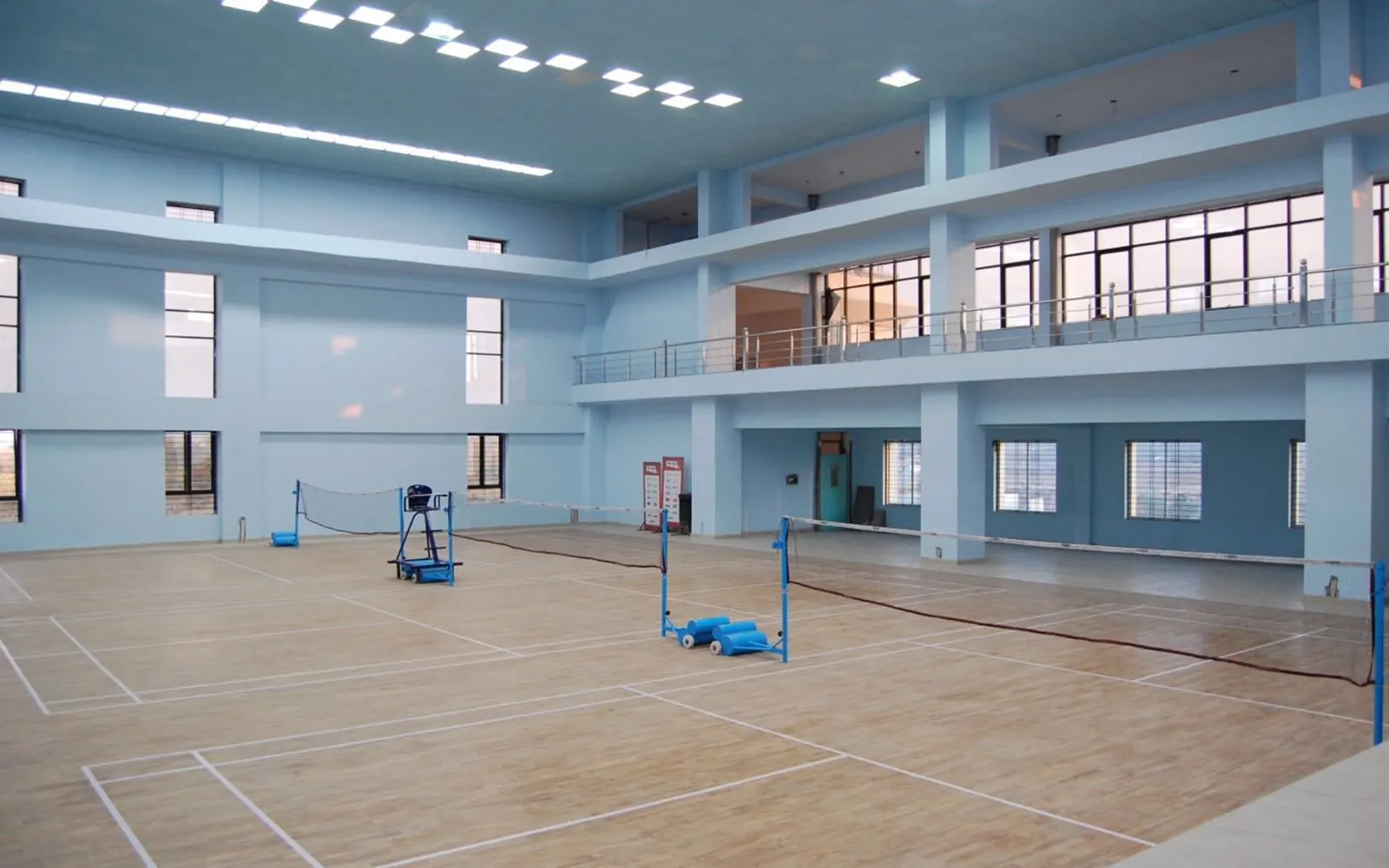
A badminton court has more lines than it first seems, because singles and doubles use different boundaries.
- Singles: the inner sidelines and the back boundary line. The court is long and narrow.
- Doubles: the outer sidelines (the full width) and the back boundary line during rallies.
- Short service line: the line near the net. A serve must pass this line to be in.
- Doubles long service line: a line a short distance inside the back boundary. In doubles, a serve that lands beyond this line is out, even though the back boundary is used once the rally is under way.
- Centre line: divides the left and right service courts.
Lines are in. A shuttle that lands on any line counts as in for the court that line bounds.
Our guide to the best places to play badminton in Kota explains what to check about court markings and floors when you book a court.
Serving rules
Where to stand: if the server’s score is even (0, 2, 4…), they serve from the right service court; if odd, from the left. The receiver stands in the diagonally opposite court.
A legal serve:
- Both server and receiver stand within their service courts without touching the lines.
- Part of both feet stays in contact with the floor until the serve is made.
- The racket first hits the base (cork) of the shuttle.
- The whole shuttle must be below 1.15 metres from the floor when it is hit. Older rules used “below the waist”, which many casual games still follow.
- The movement of the racket must be continuous and forward; you cannot fake or pause halfway.
- The shuttle must land in the diagonally opposite service court.
Doubles service order: in doubles, the side keeps serving while it wins rallies, and the server alternates service courts. When the serving side loses a rally, service passes to the other side. The players’ positions are set by the score; this is the part of the rules beginners find hardest, so ask a coach to walk you through it on court.
Common faults
A fault ends the rally, and the other side wins the point. Common faults include:
- The shuttle lands outside the boundary lines, or fails to pass over the net.
- The shuttle touches the ceiling, walls or a player’s body or clothes.
- A player touches the net or its supports with the racket, body or clothes while the shuttle is in play.
- A player reaches over the net to hit the shuttle on the opponent’s side (following through over the net after a legal hit is allowed).
- The shuttle is hit twice in succession by the same player, or by both partners one after the other.
- The shuttle is caught and slung on the racket rather than hit cleanly.
- An illegal serve, or the receiver moving before the serve is made.
- A player deliberately distracts or obstructs an opponent.
Lets
A let means the rally is replayed and no point is scored. Lets are called, for example, when the receiver was not ready and did not attempt to return the serve, or when play is disturbed by something unforeseen, such as a shuttle from a neighbouring court landing on yours. In busy multi-court halls in Kota, agree before you start how you will handle shuttles from other courts.
Etiquette on shared courts
- Call your own line faults honestly in casual play.
- Wait for a rally to end before walking behind a court.
- Return stray shuttles to the court they came from between rallies.
- Respect booking times so the next group can start on time.
Learning the rules on court
The fastest way to learn is to play practice games with someone calling the score aloud. Coaches in badminton in Kota batches usually teach serving and scoring early. If you are buying your first racket, see how to choose a badminton racket; good court shoes matter too, as our sports shoes guide explains.
Players who enjoy badminton often try pickleball, which can be played on a badminton-sized court but has quite different rules. For the footwork and stamina that long rallies need, see how to improve stamina for sports.
Rules change: check the current laws
The Laws of Badminton are revised from time to time; the 1.15 m service rule is a recent example. Before a competition, check the current laws and any event-specific rules with the organiser, and follow the umpire’s decisions during the match.
Frequently asked questions
How many points is a badminton game?
Under the standard Laws of Badminton a game is played to 21 points with rally scoring. If the score reaches 20-all, a side must lead by 2 points to win; at 29-all, the side that wins the next point wins the game. A match is usually the best of three games.
Is the line in or out in badminton?
A shuttle that lands on a line is in. The lines are part of the court they bound.
Which side do you serve from in badminton?
When the server's score is even (including 0), they serve from the right service court; when it is odd, from the left. The serve must go diagonally into the opponent's service court.
How high can you serve in badminton?
The current Laws require the whole shuttle to be below 1.15 metres from the court surface at the moment it is hit. Many casual games still use the older 'below the waist' rule. Check the rules used at your event.
What is a let in badminton?
A let means the rally is replayed without a point being scored, for example if the receiver was not ready when the serve was made, or if an unforeseen disturbance interrupts play.
Sources
Editorial team
The Kota Sports team writes and updates these guides to sport in Kota, Rajasthan, checking facts against official sources and saying clearly where readers need to confirm details with a venue or organiser.