Sports in Kota
Badminton footwork drills: seven drills to move faster and recover
Written by Kota Sports Editorial Team · Updated
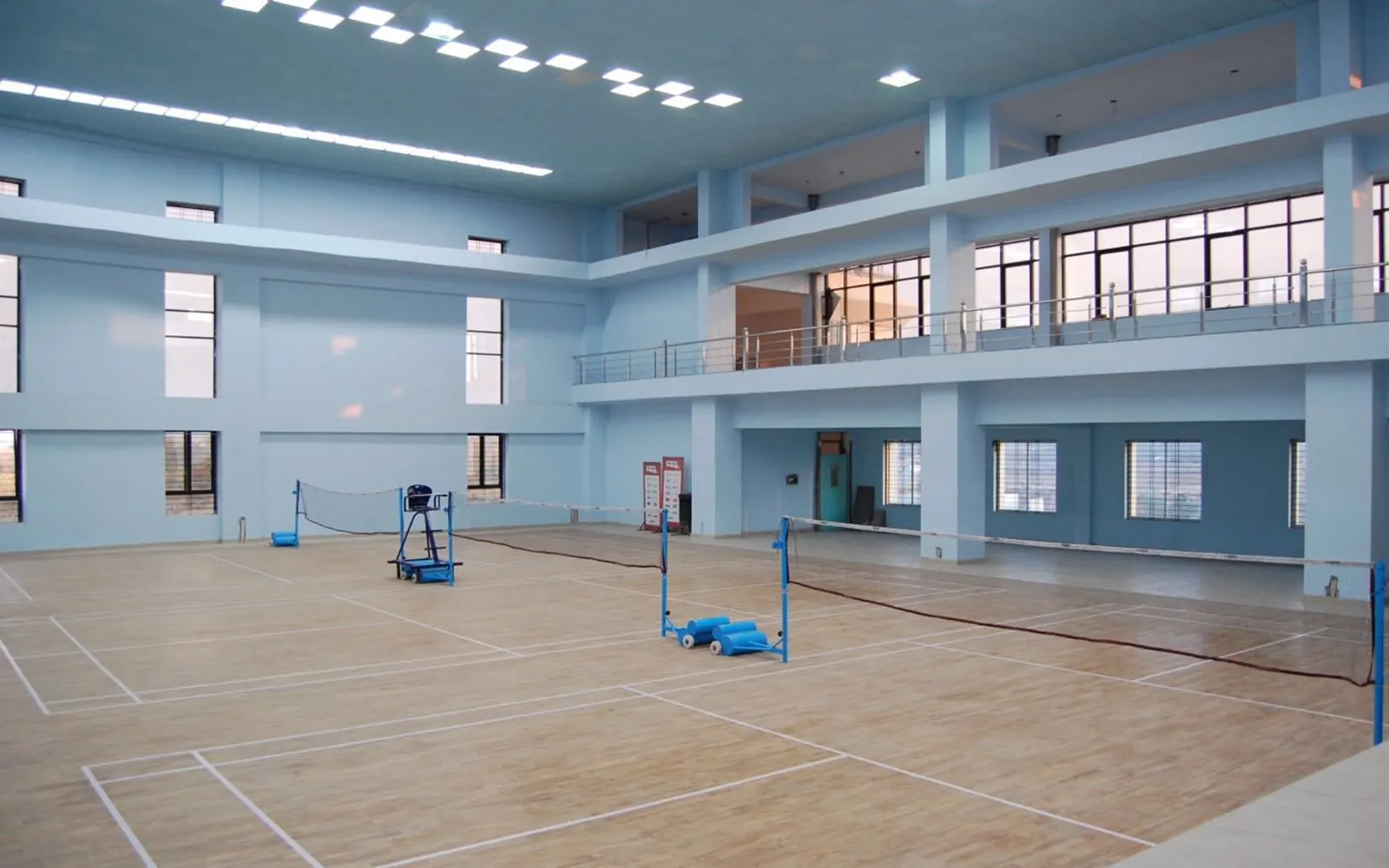
Ask any badminton coach in Kota what separates beginners from improving club players and most will say the same thing: footwork. Strokes matter, but a player who arrives late and off-balance cannot play them well. The good news is that badminton footwork drills need very little: a court or a clear space, good shoes and ten to fifteen minutes a few times a week. This guide explains the ready stance and split step, then seven drills from simple to more demanding, and a four-week plan. It is general training advice; a qualified coach watching you on court is still the best way to fix your movement.
Start with the base: ready stance and split step
The base position is near the centre of the court, slightly behind the short service line in singles. From there you can reach every corner in a few steps.
The ready stance:
- feet about shoulder-width apart, one slightly ahead of the other;
- knees bent, weight on the balls of the feet, heels light;
- racket held up in front of the body, not hanging by the knee;
- eyes on the opponent and the shuttle.
The split step is a small hop timed so you land, on both feet and slightly wider than your shoulders, just as your opponent hits the shuttle. Landing “loaded” lets you push off immediately in any direction. Mistiming it, too early or too late, is the most common footwork error at club level.
Drill 1: split-step rhythm
Stand in your base. A partner or coach stands at the net and points to a corner at random. Split step as they point, take the first step towards that corner, then reset. 3 sets of 30 seconds, rest 45 seconds. The goal is reaction and first step, not covering the full distance.
Drill 2: front corners and the lunge
From the base, move to the forehand front corner and lunge as if playing a net shot, then push back to the base. Repeat to the backhand front corner.
Lunge technique:
- the racket-side foot leads (right foot for a right-handed player);
- land heel first, then roll through the foot;
- the knee stays in line with the toes, not collapsing inwards;
- the back foot drags or stays light, keeping you balanced;
- push off the front foot to return to the base.
3 sets of 6 lunges each side. Poor lunges are a common cause of knee pain, so go slowly at first.
Drill 3: side-to-side chasse
Move sideways from the base to the forehand side and back to the backhand side using chasse steps (step, close the feet, step) rather than crossing the legs. Play a shadow defensive shot at each side. 3 sets of 30 seconds. Keep the racket up and the hips low.
Drill 4: rear-court movement
From the base, turn and move to the rear forehand corner using a chasse or a crossover step, finish with a scissor-kick or a balanced landing as you shadow an overhead clear or smash, then return. Repeat to the rear backhand (“round-the-head”) corner. 3 sets of 4 each side. Beginners should skip jumping until the movement pattern is clean.
Drill 5: six-corner shadow footwork
This is the classic badminton footwork drill. From the base, move to each of the six positions in turn: front forehand, front backhand, side forehand, side backhand, rear forehand, rear backhand, playing a shadow shot at each and returning to the centre every time. Start with a fixed order, then ask a partner to call corners at random. 3 to 4 sets of 45 to 60 seconds, with at least a minute’s rest.
Drill 6: multi-shuttle feeding
Once your shadow footwork is clean, a coach or partner feeds shuttles by hand or racket to different corners in quick succession. You move, play the shot and recover. This links footwork to real strokes. Sets of 10 to 20 shuttles. Ask the feeder to start slowly.
Drill 7: skipping for light feet
Skipping builds the calf strength, rhythm and light feet that badminton needs. Two or three short rounds at the start of a session make a good warm-up. Our skipping rope workout for beginners explains rope length, technique and a safe progression.
A four-week footwork plan
- Week 1: ready stance, split step (Drill 1) and front-corner lunges (Drill 2), slowly, three short sessions.
- Week 2: add side chasse (Drill 3) and rear-court movement without jumping (Drill 4).
- Week 3: six-corner shadow in a fixed order (Drill 5), then random calls.
- Week 4: add multi-shuttle feeding (Drill 6) with a coach or partner.
Each session: warm-up, 10 to 15 minutes of footwork, then normal play, then a cool-down. Do not add more volume every week; add quality first.
Common footwork mistakes
- Standing flat-footed between shots, so the first step is slow.
- Racket down while moving, so the shot is late even when the feet are on time.
- Not returning to the base after a shot.
- Crossing the feet in the wrong place, leaving you off-balance.
- Lunging with the knee collapsing inwards, which strains the knee.
- Doing drills too fast, which builds sloppy patterns.
Footwork in doubles
Doubles footwork follows the same basics but adds two formations:
- Attack (front and back): when your side is hitting downwards, one player covers the net and the other the rear court. The rear player needs strong rear-court movement (Drill 4); the front player needs fast, short steps and a high racket.
- Defence (side by side): when the opponents are attacking, each player covers one half of the court from a lower, wider stance. Side chasse (Drill 3) and a quick split step matter most here.
Practise rotating between the two with a partner: as soon as one of you plays a lift, move into side-by-side defence; as soon as you hit down, move into front and back. Communication helps; call “yours” or “mine” early.
How to measure progress
You do not need special equipment to see whether your footwork is improving:
- Count how many six-corner touches you complete in 60 seconds with good form, and repeat the test every two weeks.
- Ask a partner to film a few rallies on a phone and watch whether you return to the base after each shot.
- Notice how often you are late to the shuttle in games, and in which corner.
Improvement in footwork usually shows first as feeling less rushed, not as faster sprinting.
Safety and recovery
- Always warm up first; our warm-up exercises before sports routine takes ten minutes.
- Wear non-marking court shoes with good grip and cushioning; running shoes roll easily on sideways movement. See how to choose sports shoes.
- Indoor halls in Kota get very hot in summer. Drink water and stop if you feel dizzy, and read playing sports in Kota’s heat.
- Pain in the knee, ankle, Achilles or back that does not settle needs a doctor or physiotherapist; see sports injury treatment in Kota.
- Rest days matter; sleep and recovery for young athletes explains why.
Where to practise in Kota
Most players practise footwork during coaching batches or in the first part of a booked court hour. Our guides to badminton in Kota and the best places to play badminton in Kota explain how to find courts and coaching. If you are new to the game, read badminton rules for beginners and how to choose a badminton racket too.
Frequently asked questions
How can I improve my footwork in badminton?
Practise a balanced ready stance, a split step timed with your opponent's hit, and shadow drills to all six corners of the court. Short, regular sessions of 10 to 15 minutes, three times a week, work better than one long session. Ask a coach to check your lunge and recovery.
What is the split step in badminton?
The split step is a small hop that lands on both feet, slightly wider than the shoulders, just as your opponent hits the shuttle. It loads your legs so you can push off quickly in any direction.
What is six-corner footwork?
It is a shadow drill in which you move from the centre to the two front corners, the two side positions and the two rear corners, playing an imaginary shot at each and returning to the centre each time.
Can I practise badminton footwork at home?
Yes, if you have a clear space of a few metres on a non-slip floor. Shadow footwork, split steps and lunges need no shuttle. Wear proper shoes, avoid smooth tiles in socks, and keep away from furniture.
How long should footwork drills be?
For beginners, 10 to 15 minutes of footwork after a warm-up is plenty, in sets of 30 to 60 seconds with rest between. Stop when your movement gets sloppy, because tired, poor-quality repetitions build bad habits.
Sources
Editorial team
The Kota Sports team writes and updates these guides to sport in Kota, Rajasthan, checking facts against official sources and saying clearly where readers need to confirm details with a venue or organiser.