Sports in Kota
Kho kho in Kota: rules, skills and where children start
Written by Kota Sports Editorial Team · Updated
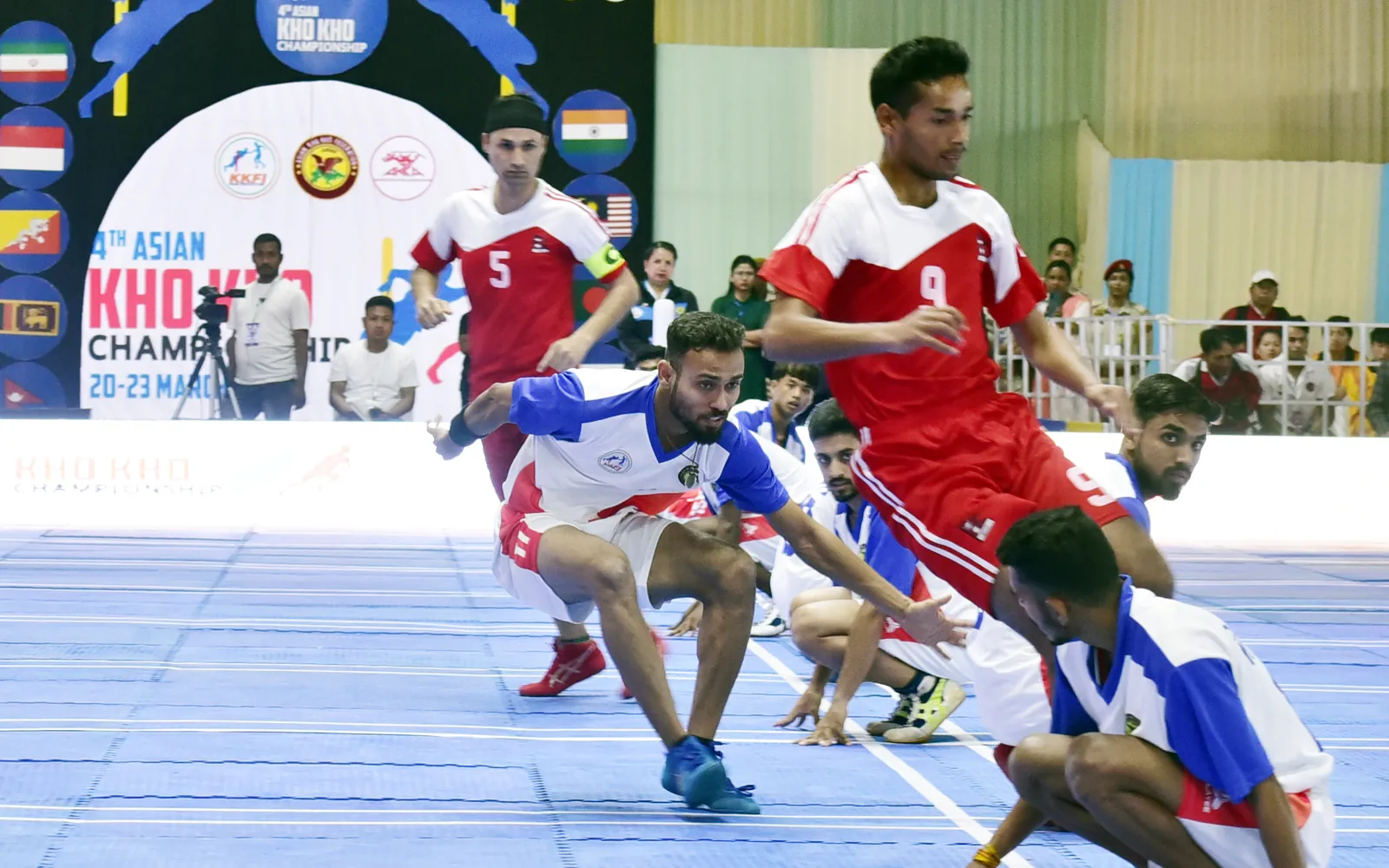
Kho kho in Kota is mostly a school and ground sport: you will see it in physical education periods, inter-school games and on open fields in the evening, played by children who often go on to other sports. It needs no expensive kit, only a flat rectangle, two posts and a lot of running. This guide explains how the game works, which skills and fitness it builds, how young players in Kota usually get into a team and how to play it safely. We do not list clubs, coaches, fees or practice timings, because those change and we cannot keep them accurate; we tell you who to ask instead.
How kho kho works
Kho kho is a chasing game between two teams. In each turn one team chases and the other defends (runs).
- The chasing team has players sitting or kneeling in a line of squares down the middle of the court, facing alternate directions. One player, the active chaser, is on their feet.
- The defending team sends its runners onto the court, usually a few at a time. They try to stay untouched for as long as possible.
- The active chaser tries to touch a runner. They cannot cross the central lane and, once they start moving towards one end, they cannot simply turn back.
- Giving a kho: to change direction, the active chaser touches a seated teammate from behind and calls “kho”. That teammate becomes the new chaser and the old chaser sits in the empty square.
- The posts at each end of the central lane let the chaser turn round to the other side.
A runner who is touched is out, and the next group comes on. Teams swap roles after each timed turn, and the team that scores more points over the innings wins. The Kho Kho Federation of India publishes the official rules, including court size, turn length and the number of runners, and these have changed over the years, so check the current version before any competition.
Why the game is worth playing
Kho kho asks for a combination that many sports want but few train so directly:
- Acceleration and quick changes of direction, as runners dodge and chasers cut across.
- Balance and body control when turning at the posts and stopping suddenly.
- Reading the game: chasers learn to give a kho at the right moment; runners learn to “chain” their movement around the seated chasers.
- Teamwork and communication in a game where every seated player can be the next chaser.
Children who play kho kho often carry this footwork into kabaddi, football, badminton and athletics. That fits the advice in our guide to the best age to start sports for kids: try several sports before specialising.
How children in Kota usually start
School first. The physical education teacher is the best starting point. Many schools field kho kho teams for inter-school competitions, and practice usually happens during school or just after.
Inter-school and district events. Strong school players may be invited to selection camps for district teams. Announcements generally come through schools, the district sports office or the relevant association; our guide to sports tournaments in Kota explains how to check whether an event is genuine.
Clubs and academies. Some multi-sport academies and clubs run kho kho alongside other games, often in batches before and after school. Visit a session before joining, and use the checklist in our beginner’s guide to joining a sports academy.
National interest. Kho kho has gained attention in recent years, including through league competitions and international championships. If a child shows promise, our page on Khelo India talent identification explains how official talent schemes work and how to avoid fake “selection” offers.
Basic skills to practise
For chasers
- A low, ready sitting position so you can spring up quickly after a kho.
- A clean kho: touch from behind and call clearly, without a false start.
- Running close to the central lane and using the posts to turn.
- Diving or stretching to touch, only on a safe surface and once taught properly.
For runners
- Short, quick steps and staying on the balls of the feet.
- Watching the chaser’s shoulders and hips, not just the hands.
- Moving in loops around the seated players to make the chaser give a kho.
- Changing pace as well as direction.
Good practice sessions break these into short drills, then put them together in small games. Our warm-up exercises before sports guide has a routine that suits the stop-start running in kho kho.
Fitness and conditioning
Kho kho is a repeated-sprint sport. Useful training includes short sprints with full recovery, change-of-direction drills, skipping for footwork (see our skipping rope workout), and simple strength work for legs, hips and core. Endurance matters too, because a match involves many bursts; our guide to how to improve stamina for sports explains how to build it without over-training.
Safety in kho kho
- Surface: play on flat, even ground cleared of stones, glass and holes. Mats or a properly prepared court are better for dives.
- Footwear: many players compete barefoot on mats; on rough ground, shoes with good grip protect the feet. Follow your coach’s advice and the event rules.
- Heat: Kota’s summer afternoons are dangerous for sprint sports. Practise early or late, drink water and stop at any sign of heat illness; see playing sports in Kota’s heat.
- Ankles and knees: sudden turns put stress on these joints. A good warm-up and gradual increase in training help; persistent pain should be checked, as our sports injury treatment guide explains.
- Collisions: coaches should teach chasers and runners to avoid head-on contact and to fall safely.
Questions to ask before joining a team
- Who coaches the team, and what is their experience?
- How many days a week is practice, and at what time?
- Is the playing surface safe, with water and shade nearby?
- How does the team decide who plays in competitions?
- Are there any fees, and what do they cover?
Ask for written details of any fees and only pay organisers you can verify. For other traditional and team sports in the city, browse our sport-by-sport guides.
Frequently asked questions
Is kho kho played in Kota?
Yes. Kho kho is a traditional Indian game and is commonly played in schools and on open grounds in Rajasthan, including Kota. Most young players start through school sports periods and inter-school competitions.
How many players are in a kho kho team?
A team has a squad of twelve players, of whom nine take the field at a time. Check the current Kho Kho Federation of India rules for squad and substitution details before a competition, because formats can vary.
What does 'kho' mean in the game?
It is the call the active chaser gives when touching a seated teammate from behind. The seated player then gets up and becomes the active chaser, while the previous chaser sits in the empty square.
What fitness does kho kho need?
Short sprints, very quick changes of direction, good balance and the ability to repeat those efforts many times. Warm-ups, ankle and knee strength work, and good footwear or a safe surface for barefoot play all help.
How can my child join a kho kho team in Kota?
Ask the school's physical education teacher first. For club or district teams, ask the teacher or the district sports office about selection camps, and only pay fees to organisers you can verify.
Sources
Editorial team
The Kota Sports team writes and updates these guides to sport in Kota, Rajasthan, checking facts against official sources and saying clearly where readers need to confirm details with a venue or organiser.