Sports in Kota
Chess in Kota: clubs, coaching and rated tournaments
Written by Kota Sports Editorial Team · Updated
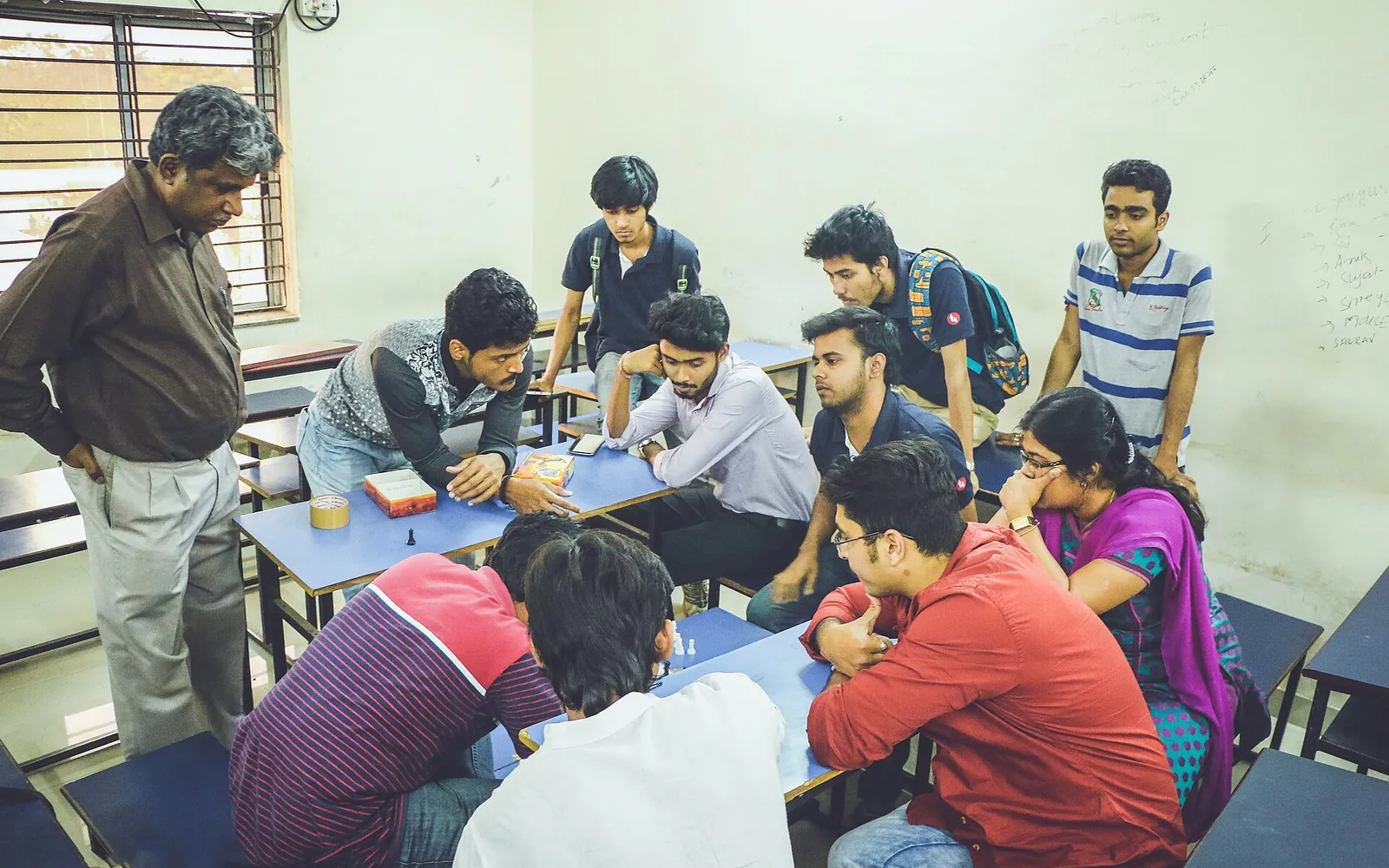
Chess in Kota feels at home in a city built around study and focus. Students who spend their days on physics and maths often enjoy a game that is all about calculation and planning, and children start learning in school clubs and coaching classes. This guide explains where to play chess in Kota, how coaching works, and how ratings and rated tournaments work in India.
Where to play
School chess clubs. Many schools run chess clubs and enter inter-school tournaments. This is the easiest way for children to start.
Coaching academies and private coaches. Coaches in Kota teach individually or in small groups, both in person and online.
Tournaments. Open and rated tournaments bring players together. Even a beginner can enter an open event to gain experience.
Online. Online platforms let you play at any hour. They are great for practice, but over-the-board games teach concentration and handling a clock in a way that online games do not.
Coaching: what to look for
A good chess coach:
- teaches principles (development, centre control, king safety) rather than only memorised openings,
- reviews your games with you, especially your losses,
- sets puzzles and endgame practice between lessons,
- encourages you to play real tournament games.
Ask about the coach’s own playing level and teaching experience, the batch size, and how progress is tracked. Our beginner’s guide to joining a sports academy in Kota has a general checklist you can adapt.
Ratings and registration
International chess ratings are managed by FIDE. You can look up any rated player on the FIDE ratings site. To earn a rating, you play in FIDE-rated tournaments against rated opponents.
In India, rated tournaments are held under the All India Chess Federation (AICF) and its state associations. Players need AICF registration, renewed as the federation requires, to enter rated events. Rules and fees are set by the federation and change from time to time, so check its website.
Entering a tournament
Before you enter:
- Check that the event is approved by the state chess association or listed by AICF.
- Read the regulations: time control, number of rounds, rating categories and prizes.
- Confirm the venue, dates and reporting time.
- Pay only through the official entry process listed by the organiser.
Tournament days can be long. Bring water, a light snack and a pen for recording moves. For more tips on following and checking local events, see our guide to sports tournaments in Kota.
Chess etiquette
Shake hands before and after the game, stay quiet near boards, touch a piece only if you intend to move it, and keep your phone switched off and away from the playing area. Breaking the phone rule can lead to forfeit.
Chess and studies
Chess is popular with Kota’s students, but it competes for time with exam preparation. Short online games or a weekly club evening work for many students, with tournaments saved for holidays. Read how Kota’s youth balance studies and sports for more ideas. Mixing chess with a physical sport such as table tennis or badminton keeps both mind and body fresh.
For parents
Chess is a safe, low-cost activity for children. Start with a school club or a small group class rather than expensive one-to-one coaching. Let children play tournaments for experience, and praise effort and learning rather than results. Watch for tournament fatigue: very long days are tiring for young players.
Improving between lessons
Most improvement in chess happens between lessons. Solve a few tactical puzzles every day, because tactics decide most games below expert level. Play slower games rather than only fast online blitz, and review every serious game afterwards, first on your own and then with an engine or coach. Learn basic endgames, such as king and pawn endings and simple rook endings, early on. Keep a notebook of mistakes you repeat; most players lose to the same few habits again and again.
Staying fresh in long games and tournaments
Chess tournaments can mean several long games in a day or over a weekend. Players who look after their body usually play better in the final rounds:
- Sleep well the night before; late-night preparation rarely pays off.
- Eat light, regular meals and carry water and a simple snack.
- Move between rounds. A short walk and a few stretches clear the head after hours at the board.
- Calm your breathing. Slow breathing before a game or during a tense position helps some players stay focused. Some combine chess with yoga for this reason; see yoga classes in Kota.
Balancing chess with physical activity
Chess is a sport of the mind, but long hours sitting are hard on the back and neck. Young players especially benefit from regular physical activity alongside chess. A short daily routine like our fitness routine for Kota students works for chess players too, and a sport such as table tennis in Kota adds quick reactions and fun.
Online chess safely
Online play is a great way to practise, but agree screen-time limits with children, keep accounts private, and teach them never to share personal details with opponents. Use reputable platforms and make sure rated online games do not replace over-the-board practice before tournaments.
Learning openings without memorising
New players often ask which opening to learn first. At beginner level, principles matter more than long move lists: control the centre, develop knights and bishops, castle early, avoid moving the same piece repeatedly and keep the queen back in the first few moves. Pick one opening as White, such as the Italian Game, and one reply each to 1.e4 and 1.d4 as Black, and learn the ideas behind the first few moves. Our chess openings for beginners guide explains the principles, six sound openings and how to avoid early traps such as Scholar’s Mate.
A practical routine for students with limited time:
- Two slow games a week (15 minutes or more per side) with your chosen openings.
- Ten minutes of tactics puzzles on most days.
- A short review of each slow game, noting where you left the opening principles.
Coaches in Kota often build their first lessons around these basics, so a beginner who already knows them gets more out of a coaching batch.
Most games between beginners are decided by tactics rather than openings. Our chess tactics for beginners guide explains forks, pins, skewers and discovered attacks, with a short daily puzzle routine.
How to check current information
- Rated tournaments and registration: AICF and the state chess association.
- Ratings: the FIDE ratings site.
- Coaching: ask the coach for a written schedule, fee list and trial lesson.
Frequently asked questions
How do I get a FIDE rating?
Play in FIDE-rated tournaments. Once you have played enough games against rated opponents and meet FIDE's rules, you receive a published rating. In India, you also need AICF registration to play in rated events.
Is there chess coaching in Kota?
Yes. Schools, private coaches and academies offer chess coaching, both in person and online. Ask about the coach's own rating or experience and the structure of lessons.
Where can I play chess in Kota?
At school chess clubs, coaching academies, rated and open tournaments, and online. Some libraries and community centres host informal games.
Is chess good for students preparing for exams?
Chess can be a relaxing mental break, but long tournament days take time. Many students play short online games or weekly club sessions during exam preparation and save tournaments for holidays.
How can I stay focused in long chess tournaments?
Sleep well before the event, eat light regular meals, drink water, take a short walk between rounds and use slow breathing to stay calm. Regular physical activity outside chess also helps concentration.
Which chess opening should a beginner learn first?
Many coaches start beginners with the Italian Game (1.e4 e5 2.Nf3 Nc6 3.Bc4) as White because it follows the opening principles. As Black, replying 1...e5 to 1.e4 and 1...d5 to 1.d4 keeps things simple. Learn the ideas rather than long move lists.
Sources
Editorial team
The Kota Sports team writes and updates these guides to sport in Kota, Rajasthan, checking facts against official sources and saying clearly where readers need to confirm details with a venue or organiser.